
Cairo is a vibrant, historic city that offers an unforgettable experience alongside your medical treatment. Whether you are coming for rhinoplasty, dental implants, or bariatric surgery, this guide covers everything you need to prepare for your medical trip to Egypt.
Getting to Cairo
Cairo International Airport (CAI) is well-connected with direct flights from major cities worldwide. Here are typical flight times:
- London: 5 hours direct
- Dubai: 4 hours direct
- Istanbul: 2.5 hours direct
- Riyadh: 2.5 hours direct
- New York: 11 hours (usually one stop)
Most Fly2Heal packages include airport pickup, so your coordinator will be waiting in the arrivals hall with a sign. If you are arranging your own transport, Uber is available at the airport and typically costs $10-$15 to central Cairo.
Visa Requirements
Many nationalities can obtain a visa on arrival at Cairo Airport for $25 USD. This includes citizens of the USA, UK, EU countries, Canada, and Australia. The visa-on-arrival is valid for 30 days, which is enough for most medical trips.
Some nationalities need to apply in advance through an Egyptian embassy. Check your country's requirements before booking your flight.
Weather and When to Visit
Cairo has a desert climate with hot summers and mild winters:
- October to April: Best time for medical tourism. Pleasant temperatures (15-25C / 59-77F). Cool evenings. Occasional rain in December-January.
- May to September: Hot and dry (30-40C / 86-104F). If you visit during summer, plan to stay indoors during midday and schedule sightseeing for early morning or evening.
Most medical tourists visit between November and March when the weather is most comfortable for recovery.
Currency and Payments
- Currency: Egyptian Pound (EGP). As of early 2026, approximately 50 EGP = 1 USD.
- Hospital payments: Major hospitals accept credit cards (Visa, Mastercard). Some accept bank transfers in advance.
- ATMs: Widely available at malls, hotels, and hospital complexes. Most accept international cards.
- Exchange: Use banks or official exchange offices for the best rates. Avoid informal money changers.
- Tipping: Tipping is common in Egyptian culture. Small tips of 20-50 EGP are appreciated for hotel staff, drivers, and restaurant servers.
- Package payments: Fly2Heal accepts bank transfers, credit cards, and payment plans.
Getting Around Cairo
- Fly2Heal packages: All medical transfers between your hotel and the hospital are included. You travel in a private, air-conditioned vehicle.
- Uber and Careem: Both ride-hailing apps work well in Cairo and are very affordable. A 30-minute ride typically costs $3-$5.
- Cairo Metro: Clean, efficient, and cheap. It connects major areas including downtown, Heliopolis, and Giza. However, it may not be practical immediately after surgery.
- Driving: Do not attempt to drive in Cairo yourself. Traffic is notoriously chaotic and road rules are loosely followed. Leave the driving to locals.
Where to Stay
Your choice of accommodation depends on your package level and which hospital you are visiting:
- 6th of October City: Close to Dar Al Fouad Hospital. Quiet, modern area with malls and restaurants. Good for recovery.
- Maadi: Upscale, tree-lined neighborhood popular with expats. Close to As-Salam International Hospital.
- Heliopolis: Near Cairo International Airport. Good for short stays.
- Zamalek: Island district on the Nile. Upscale dining and cafes. Beautiful riverside walks during recovery.
- New Cairo / 5th Settlement: Modern area with premium hotels and hospitals.
All Fly2Heal packages include hotel accommodation matched to your chosen tier (3-star Essential, 4-star Comfort, or 5-star Premium).
What to Pack
Medical essentials:
- All current medications with prescriptions (in original packaging)
- Medical records and imaging (bring digital copies on a USB drive and email them to your coordinator in advance)
- Comfortable, loose-fitting clothing that is easy to put on without raising your arms (important after cosmetic or bariatric surgery)
- Slip-on shoes (you may not be able to bend down easily after some procedures)
General items:
- Sunscreen SPF 50 and sunglasses
- Modest clothing for visiting mosques and cultural sites (covering shoulders and knees)
- Universal power adapter (Egypt uses Type C, European two-pin plugs)
- A light jacket or sweater for air-conditioned hospitals and cool winter evenings
- Bottled water (though most hotels provide this)
Things you do NOT need to bring:
- Toiletries (hotels provide them)
- Towels or bedding (provided by hotels and hospitals)
- Surgical supplies (your surgeon provides everything)
Communication and Internet
- Language: Arabic is the official language, but English is widely spoken in hospitals, hotels, and tourist areas. Your Fly2Heal coordinator speaks fluent English.
- Phone: Your Fly2Heal package includes a local SIM card with data. Alternatively, most international carriers offer Egypt roaming packages.
- WiFi: Available in all hotels and most hospitals. Generally reliable and fast enough for video calls.
Sightseeing During Recovery
One of the best parts of medical tourism in Egypt is combining your treatment with cultural experiences. Depending on your procedure and recovery timeline:
Light recovery (walking, sitting) - from day 3-4 post-op for minor procedures:
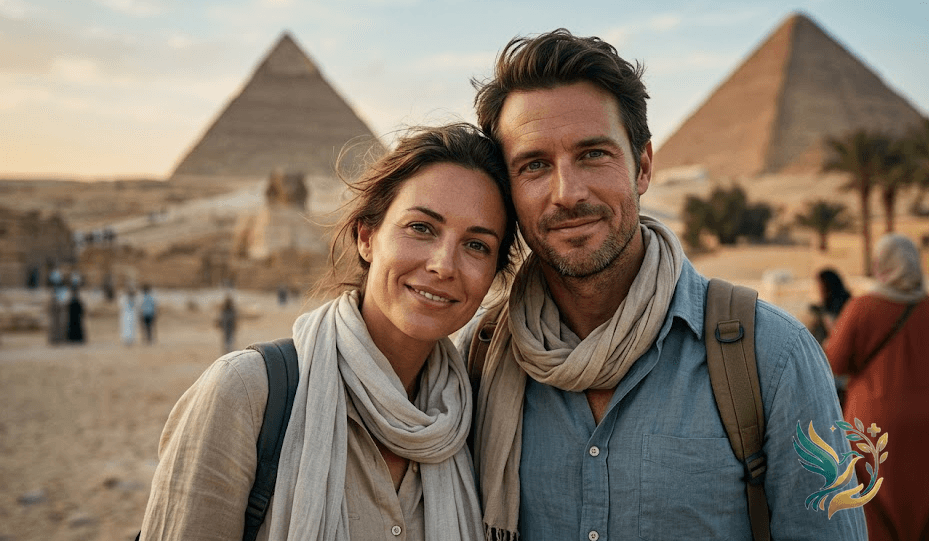
- Pyramids of Giza and the Sphinx (wheelchair accessible areas available)
- The Grand Egyptian Museum (opened 2024, world-class facility)
- Khan El Khalili bazaar for souvenirs and Egyptian tea
- Al-Azhar Park for peaceful gardens with city views
Moderate activity - from day 7-10 post-op:
- Nile dinner cruise with live music and Egyptian cuisine
- Coptic Cairo walking tour through Old Cairo's historic churches
- Islamic Cairo and the Citadel of Saladin
- Sound and Light Show at the Pyramids (seated)
Extended stay activities - for patients staying 2+ weeks:
- Day trip to Alexandria (2.5 hours by car)
- Saqqara and the Step Pyramid
- Desert safari to the Fayoum Oasis
- Felucca sailboat ride on the Nile at sunset
Always check with your surgeon before any sightseeing activity, and avoid direct sun exposure if you have had facial surgery.
Food and Dining During Recovery
Egyptian cuisine is delicious and diverse. Here is what to know during your medical trip:
During initial recovery (first 2-3 days):
- Your hospital provides meals during your stay
- Stick to light, easily digestible food: soups, rice, grilled chicken
- Stay well hydrated. Drink bottled water.
- Avoid spicy food if you have had dental or facial surgery
Once you are feeling better:
- Try koshari (Egypt's national dish: rice, lentils, pasta, tomato sauce)
- Ful medames (fava beans, a traditional breakfast)
- Grilled kebab and kofta
- Fresh juices (mango, guava, sugarcane) from street vendors
- Om Ali (Egyptian bread pudding, a must-try dessert)
Dining recommendations:
- Hotel restaurants are safe and convenient during early recovery
- Zamalek and Maadi have excellent international restaurants
- Nile-view restaurants in Garden City offer memorable dining experiences
- Avoid street food during the first few days of recovery as a precaution
Safety and Practical Tips
- Egypt is generally safe for tourists. The areas around hospitals, hotels, and tourist sites have security presence.
- Keep your valuables in your hotel safe.
- Save your coordinator's phone number and the hospital's emergency number in your phone.
- Carry a printed copy of your hotel address in Arabic in case you need to show a taxi driver.
- Download Uber and Google Maps before arrival.
What Real Travelers Say
"A brilliant experience. The doctor was always available for calls and messages, checking in continuously over the first three days." - Bariatric surgery patient in Cairo
*Source: WhatClinic*
"While on vacation, I needed stitches - clean, fast, and reassuring experience." - UK traveler who needed emergency care
*Source: My Hospital Now*
"I couldn't recommend this service more highly." - Keiva Lawrence, traveled from London for gastric sleeve surgery
*Source: WhatClinic*
"He put me at ease, answered my questions day and night, and dealt with minor issues very promptly." - Vicki B., flew to Egypt alone from the UK for gastric sleeve
*Source: WhatClinic*
Frequently Asked Questions
Is Cairo safe for medical tourists?
Yes. The areas around hospitals, major hotels, and tourist sites are safe and well-secured. Your Fly2Heal coordinator is with you for all medical appointments, and most packages include private transport.
Do I need a visa to visit Egypt?
Many nationalities (including USA, UK, EU, Canada, Australia) can get a visa on arrival at Cairo Airport for $25. It is valid for 30 days.
What language do they speak in Egyptian hospitals?
Arabic is the official language, but doctors and staff at international hospitals speak fluent English. Your coordinator will also translate if needed.
How much spending money should I bring?
Beyond your medical package (which covers hospital, hotel, and transfers), budget $30-$50 per day for meals, sightseeing, and shopping. Cairo is very affordable.
Can I use my credit card in Egypt?
Yes. Major credit cards are accepted at hospitals, hotels, and upscale restaurants. For taxis, markets, and small shops, you will need cash (Egyptian Pounds).
Is the tap water safe to drink?
Stick to bottled water, which is cheap and available everywhere. Hotels and hospitals provide bottled water.